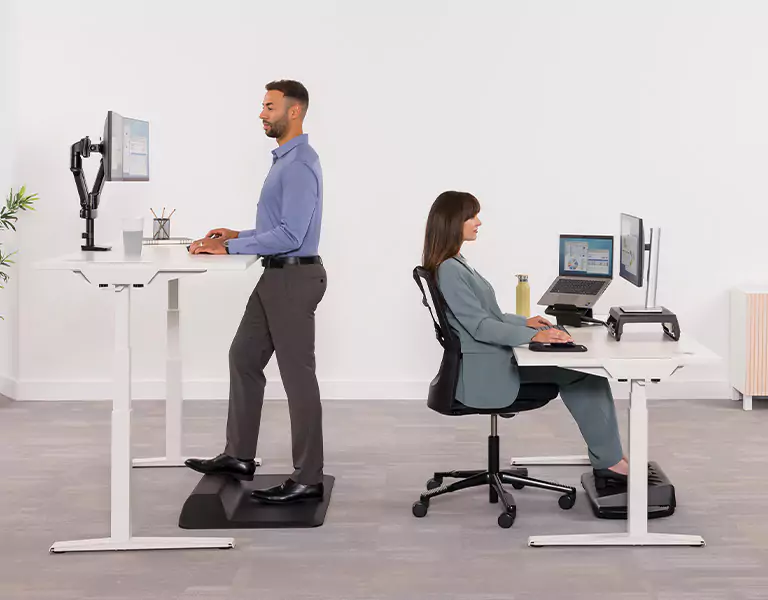
5 Essential Ergonomic Tips to Elevate Your Office Comfort
Creating a comfortable workspace is crucial for productivity and overall well-being. Here are 5 essential ergonomic tips that can help elevate your office comfort:
- Invest in a Quality Chair: A good ergonomic chair provides proper lumbar support, helping to maintain your spine's natural curve. Look for adjustable options that allow you to customize the height and tilt for optimal comfort.
- Monitor Positioning: Ensure your computer monitor is at eye level, about an arm's length away. This alignment reduces neck strain and promotes better posture.
- Keyboard and Mouse Placement: Keep your keyboard and mouse close to your body to avoid overstretching. Your elbows should be at a 90-degree angle, and your wrists should remain straight to minimize strain.
- Practice Good Posture: Sit up straight with your feet flat on the ground or on a footrest and your knees at a 90-degree angle. This position can help reduce fatigue and discomfort.
- Take Regular Breaks: Set a timer to remind yourself to take breaks every hour. Stand, stretch, or walk around to alleviate stiffness and improve circulation.
Counter-Strike is a highly influential first-person shooter that has captivated gamers since its release. The game pits two teams against each other, with one side acting as terrorists and the other as counter-terrorists. Players can enhance their gaming experience with various tools, including Top 10 Desk Accessories for Productivity, which can help create a more efficient and enjoyable gaming environment.
How Ergonomics Can Boost Your Productivity and Well-Being
Ergonomics plays a crucial role in enhancing both productivity and well-being in the workplace. By optimizing the design of workspaces, tools, and tasks, individuals can significantly reduce physical strain and discomfort. When employees are comfortable, they can focus better on their tasks, leading to increased efficiency. Studies have shown that implementing ergonomic solutions can decrease absenteeism and improve job satisfaction. Simple adjustments, such as using an adjustable chair, proper desk height, and ergonomic keyboards, can make a world of difference in how individuals perform their daily duties.
Moreover, prioritizing ergonomics ultimately fosters a healthier work environment. For instance, incorporating regular breaks, promoting good posture, and encouraging movement can lead to numerous health benefits, including reduced musculoskeletal disorders and improved mental health. Incorporating ergonomic practices not only benefits individual employees but also contributes to a more engaged and productive team. To harness the full potential of ergonomics, organizations should consider conducting assessments to identify potential improvements in their workspaces.
Is Your Office Chair Supporting You? The Ultimate Ergonomic Assessment Guide
In today's fast-paced work environment, spending long hours seated at a desk has become the norm for many. An often-overlooked factor in workplace productivity and health is the office chair. A good ergonomic office chair can significantly impact your posture, comfort, and overall well-being. If you find yourself frequently experiencing back pain, discomfort, or fatigue, it may be time to assess whether your current chair is supporting you adequately. Begin by checking your chair's height and adjust it to ensure your feet rest flat on the floor, while your knees are at a 90-degree angle.
Next, evaluate the lumbar support of your chair. Proper lumbar support is crucial for maintaining the natural curve of your spine, which helps prevent slouching and reduces the risk of chronic pain. Consider the following factors in your ergonomic assessment:
- Seat Depth: Ensure that there is a 2-4 inch gap between the edge of the seat and the back of your knees.
- Armrests: Your armrests should allow your shoulders to relax, keeping your arms close to your body.
- Adjustability: Look for a chair that can be easily adjusted to fit your body size and shape.